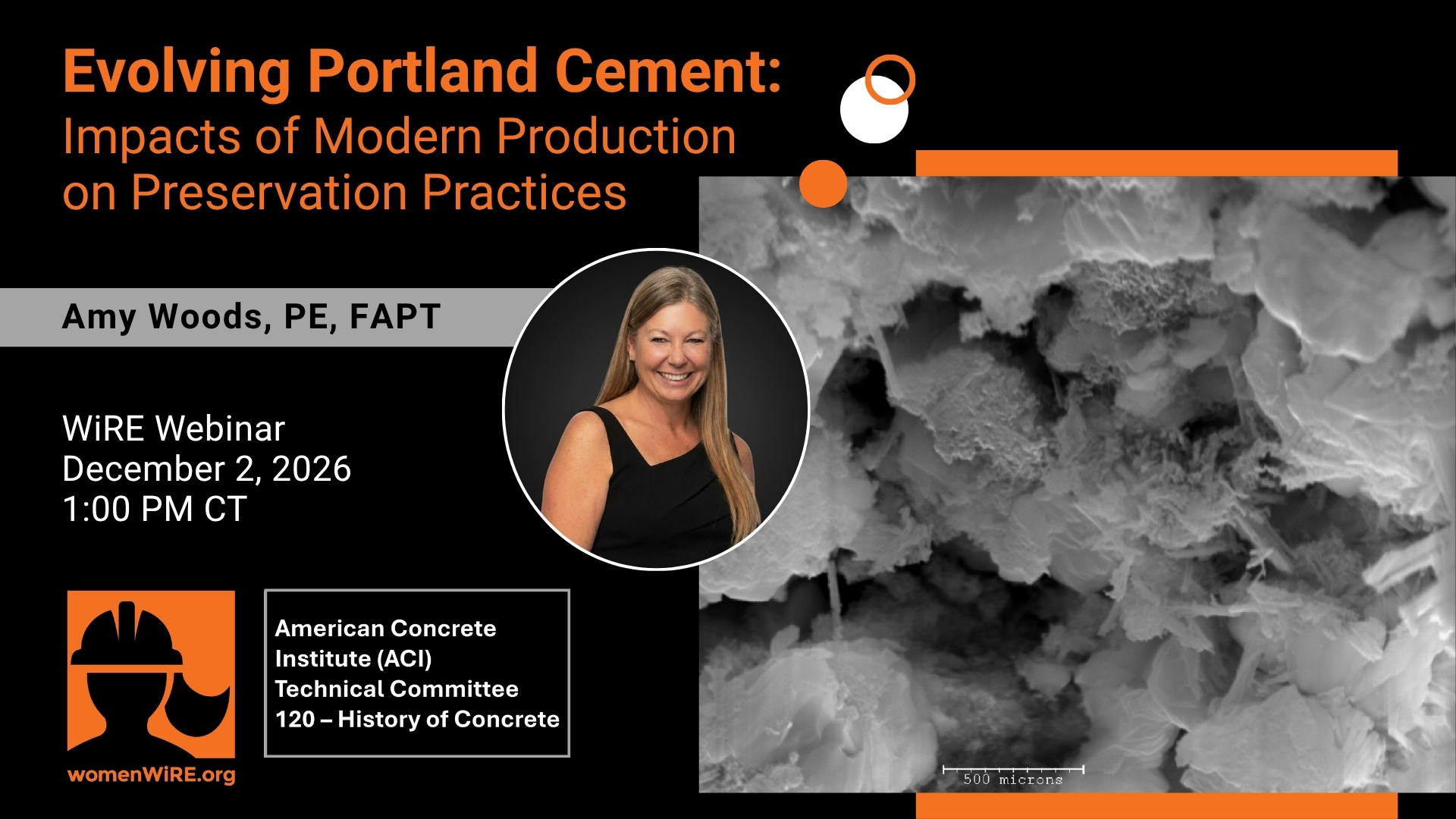
Evolving Portland Cement: Impacts of Modern Production on Preservation Practices
Description
Too often, portland cement is misunderstood, leading to cementitious repair “recipes” that unintentionally damage original materials. Stronger and denser concrete repairs, stone patching repairs, stucco repairs, and replacement masonry joint mortar can trap moisture, cause premature deterioration, or produce visually incompatible repairs. This presentation aims to improve understanding of material differences so that modern cementitious products can be used in ways that support preservation goals and durability rather than undermine them.
Early manufacture of portland cement in the United States is credited to David Saylor in the 1870s at the Coplay Cement Company in Pennsylvania’s Lehigh Valley. As production advanced from vertical kilns to horizontal rotating kilns in the early twentieth century, portland cement manufacturing expanded nationwide. Regions such as Indiana, with its abundant limestone resources, became major centers of large-scale production of portland cement.
Portland cement is typically produced from limestone, clay, and other materials of similar bulk composition. The cement hydrates to form four primary phases, including alite, belite, aluminate, and ferrite. Modern portland cement differs significantly from historic portland cement in properties, color, and particle size. These differences stem from changes in plant equipment and manufacturing processes. In historic preservation projects, where only modern materials are available, these manufacturing advancements can complicate efforts to match or replicate older cementitious materials.
This presentation will step through portland cement’s history to illustrate significant changes that affect the material properties. Understanding these differences is critical to selecting materials that are appropriate and compatible with historic substrates.
Speaker Info
 Amy Woods, PE, FAPT
Principal Engineer
312-859-0976
Amy Woods, PE, FAPT is a principal engineer with over 25 years of experience in the field of forensic engineering of building materials, both historic and contemporary structures. Her experience includes facade and failure investigations with materials such as brick, masonry, terra cotta, stone, concrete, terrazzo, and stucco. Ms. Woods focuses on material consulting and collaborating with laboratory services on projects. From the University of Illinois at Urbana-Champaign, Ms. Woods obtained a BS in Architecture, MArch in Architecture Historic Preservation, and MS in Civil Engineering Building Materials with a focus on cement chemistry. Ms. Woods is a Fellow of the Association for Preservation Technology International (APT) and past Co-Chair of the Preservation Engineering Technical Committee (PETC), past Board member of the International Concrete Repair Institute (ICRI) Seattle and Chicago chapters, Existing Masonry Committee member for The Masonry Society (TMS), and founder of Women in Restoration & Engineering (WiRE).
Speaker
-
Amy Woods